At the opening
A Wanted Man’s Name
[Del Delaney](entity:character-recall-character-del-delaney-76f4feef2127) introduces himself as a [Montana](entity:location-recall-location-montana-a4c636ab2f04) fugitive whose name appears on reward notices. He insists that the rape charge against him is false, but the accusation has already made him a hunted man.
The first Saturday of the month
The Prairie City Dance
After ten years working at [Wineglass](entity:location-recall-location-wineglass-d3ea2edb5e58), Del rides to [Prairie City](entity:location-recall-location-prairie-city-74c4ad3f92b2) for its monthly dance. There he is drawn to [Ruby Prentiss](entity:character-recall-character-ruby-prentiss-f3f8549797a3), a beautiful woman whose reputation has made her the center of local gossip.
During the dance
Sid’s Jealous Stare
Ruby chooses Del for several dances, leaving her former steady, deputy [Sid Blackwell](entity:character-recall-character-sid-blackwell-03af1635dc6f), glaring at them. Del takes pleasure in Sid’s jealousy, unaware how quickly their rivalry will turn dangerous.
After the dance
The Walk Home
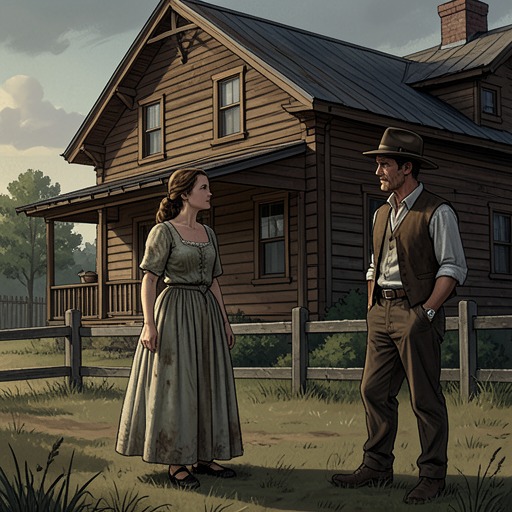
Del escorts Ruby to her cottage, feeling flattered by her attention and by the envy of the men she has left behind. He suspects she may want him to replace Sid, though he is not looking to marry or settle down.
Late that night
Del Flees the Bedroom
At Ruby’s home, a kiss and an invitation into her bedroom make Del imagine that she may be trapping him into marriage. Although attracted to her, he panics and bolts before the two sleep together.
The following morning
Arrest for Rape
Sid arrives at Del’s home with a drawn gun and announces that Del is under arrest for raping Ruby. Del recognizes that Sid’s father, the local judge, could ensure a trial goes against him, and fears prison more than flight.
The following morning
Del Escapes Prairie City
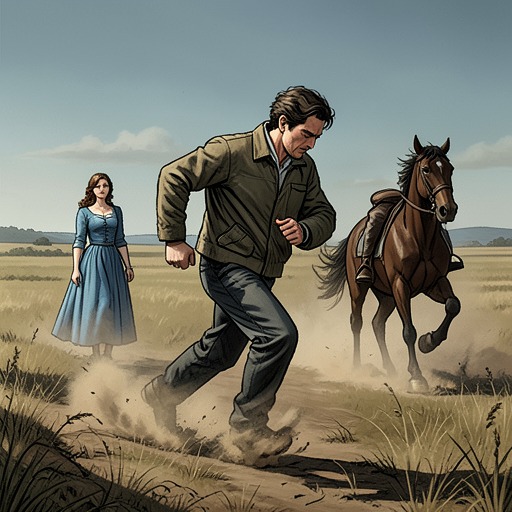
Del pretends to wash his face, then knocks Sid down when the deputy hesitates to shoot him in the back. He ties Sid up, takes food, money from his mother’s savings, and his father’s rifle, then rides out of town.
The days after his escape
Flight Across State Lines
Del heads south, crosses from [Montana](entity:location-recall-location-montana-a4c636ab2f04) into Wyoming, and avoids large towns and county seats. Cold weather, hunger, and the need to keep moving give him a taste of the lonely life of a fugitive.
After reaching Star Valley
The Plowman’s Anger
When his money runs out, Del takes work on a Mormon farm-and-ranch outfit in [Star Valley](entity:location-recall-location-star-valley-63bcd8f7a36e). Plowing and gardening make him resent that he is already branded an outlaw, and he begins to wonder whether he might as well live as one.
After a month in Star Valley
A Bank Robbery in Mind
Del quits when the rancher’s wife asks him to hoe her garden. He considers robbing a bank as the quickest way to build a stake, reasoning that his life has already been ruined by the law even though he has not committed the crime he is accused of.
Late May
Arrival in Baggs
Del rides into [Baggs](entity:location-recall-location-baggs-a383a21b7744), a small town near the [Colorado](entity:location-recall-location-colorado-e0fc68fd7477) line known for tolerating men on the run. He hopes to find an outlaw outfit that needs another man for a bank robbery.
The evening of Del’s arrival in Baggs
Two New Companions
At supper Del meets [The Kid](entity:character-recall-character-the-kid-4a3570659ab1), an outgoing young drifter, and [John Smith](entity:character-recall-character-john-smith-c7be07591715), a grave, reserved cowboy who uses an assumed name. Their friendliness gives Del his first sense of companionship since leaving [Montana](entity:location-recall-location-montana-a4c636ab2f04).
That evening in Baggs
The Saloon Blow
A stranger elbows Del at the Long Horn saloon bar. Del’s temper erupts; he strikes the man across the head with his gun, and the stranger collapses.
Immediately after the saloon fight
Bull Hammer’s Name
[The Kid](entity:character-recall-character-the-kid-4a3570659ab1) and [John Smith](entity:character-recall-character-john-smith-c7be07591715) hustle Del out of town before he understands why the saloon has fallen silent. By the [Little Snake River](entity:location-recall-location-little-snake-river-2a791a892ab6), they explain that the man he struck was [Bull Hammer](entity:character-recall-character-bull-hammer-cfb8739a14ab), a violent lawman whom nobody in the region dares challenge.
The morning after leaving Baggs
Work at the J Bar
The three men ride to the [J Bar Ranch](entity:location-recall-location-j-bar-ranch-71542c11284e), where foreman [Stub Rawls](entity:character-recall-character-stub-rawls-f993e67a97d2) hires them to help move cattle toward summer grass. Del is grateful for work and food, while the easy acceptance of the crew lets him briefly feel that he belongs somewhere.
Several weeks into the J Bar job
The Kid’s Confession
While working cattle, [The Kid](entity:character-recall-character-the-kid-4a3570659ab1) reveals that he killed a man during a confrontation with a bully and fled rather than face trial. He admits that he is glad the man is dead, exposing the dangerous streak beneath his genial manner.
The same conversation
Smith’s Past
[The Kid](entity:character-recall-character-the-kid-4a3570659ab1) tells Del that [John Smith](entity:character-recall-character-john-smith-c7be07591715) killed a former bank employer after finding him in bed with Smith’s wife. Smith regrets the killing and still loves his wife, a confession that separates his sorrowful conscience from The Kid’s more settled outlaw identity.
About a month after Del reaches the J Bar
The Black Horsemen
[Jerry Sewell](entity:character-recall-character-jerry-sewell-09f2529399b5), the ranch’s owner, rides in with four hard-looking men and a string of fine horses. Their black clothing and their private meeting with Sewell unsettle the hired hands, who sense that the ranch operation is not what it claims to be.
That evening
A Horse-Thieving Operation
Del, [The Kid](entity:character-recall-character-the-kid-4a3570659ab1), and [John Smith](entity:character-recall-character-john-smith-c7be07591715) suspect that the cattle ranch is a cover for stealing and moving horses. [Stub Rawls](entity:character-recall-character-stub-rawls-f993e67a97d2) hints that they should leave, and the three men decide not to remain where their presence might expose Sewell or attract [Bull Hammer](entity:character-recall-character-bull-hammer-cfb8739a14ab).
The following morning
Hammer Rides In
As the three men prepare to quit, [Bull Hammer](entity:character-recall-character-bull-hammer-cfb8739a14ab) arrives at the J Bar with another lawman. Sewell is visibly terrified, and Del realizes the visit may give him a chance to test whether he can stand up to the feared marshal.
That morning at the J Bar
Del Challenges Hammer
Del steps between [Bull Hammer](entity:character-recall-character-bull-hammer-cfb8739a14ab) and Sewell, taunting Hammer about the blow he received in [Baggs](entity:location-recall-location-baggs-a383a21b7744). He hands over his gun belt and accepts the fight, motivated partly by curiosity about his own courage and partly by a desire to divert Hammer from the ranch hands.
Immediately afterward
The Fight at the Corral
Del avoids Hammer’s crushing grasp and lands a series of punches, but Hammer’s power nearly overwhelms him. Del finally catches him with a hard uppercut that knocks him down, proving he can survive the encounter but not that he has mastered his own reckless pride.
After the fight
Leaving the J Bar
Sewell blames Del for bringing danger to the ranch and threatens him, but [The Kid](entity:character-recall-character-the-kid-4a3570659ab1) draws a gun and Smith backs him up. The three leave before Sewell can retaliate, and Del rides away bruised and aware that luck helped him beat Hammer.
During the ride south
The Roily Scheme
Del and his companions discuss [Stub Rawls](entity:character-recall-character-stub-rawls-f993e67a97d2)’s suggestion that they rob the bank in [Roily](entity:location-recall-location-roily-8c1b48abe864) to raise money for a small ranch of their own. Del hesitates because one robbery would make his outlaw future harder to escape, but the other two believe none of them can safely return to their old lives.
At Trout Lake
The Kid’s Record
Del asks how deeply [The Kid](entity:character-recall-character-the-kid-4a3570659ab1) is wanted. The Kid says he has killed three men and taken part in six bank robberies, while [John Smith](entity:character-recall-character-john-smith-c7be07591715) says his own murder charge and involvement in a robbery leave him with little prospect of going home.
That night at Trout Lake
A Future Beyond the Trail
The men talk about using their share of the [Roily](entity:location-recall-location-roily-8c1b48abe864) robbery to buy a remote spread and stop running. Smith dreams of a home and another chance at love, while Del remains uncertain whether he can commit himself to a life of outlawry.
The following afternoon
Arrival in Roily
The three riders enter [Roily](entity:location-recall-location-roily-8c1b48abe864), a nearly abandoned former mining town in the [San Juan Mountains](entity:location-recall-location-san-juan-mountains-c72989fe45da). They leave their horses at a stable and take rooms, preparing to inspect the town and its bank before the planned robbery.
That evening in Roily
A Ghost Town’s Last Life
Del sees boarded-up buildings, empty homes, and a few surviving businesses that remember the town’s silver-boom past. The contrast between [Roily](entity:location-recall-location-roily-8c1b48abe864)’s old promise and its decline makes its remaining bank seem like a tempting but uncertain target.
That evening
The Bank Robbery Postponed
[The Kid](entity:character-recall-character-the-kid-4a3570659ab1) and [John Smith](entity:character-recall-character-john-smith-c7be07591715) play cards while Del returns to the hotel, nervous about the planned robbery. He hears a woman scream from across the hall, and the sound pulls him away from his room before he can settle into bed.
That night in Roily
A Murder in the Hotel Room
Del breaks into the woman’s room and finds a man pressing a pillow over her face. He pulls the attacker away and knocks him down, stopping the murder before he can identify the woman or understand why she has been targeted.
Moments later
Kate’s Plea for Help
The woman introduces herself as [Kate Muldoon](entity:character-recall-character-kate-muldoon-ffd99d9cf11d) and says that [Max Landon](entity:character-recall-character-max-landon-2fa08c26df5f) can hire more killers. She refuses to trust the sheriff and insists that Del help her leave town, arguing that because he saved her life she now belongs to him.
Later that night
The Stable Ambush
Del leaves a note for [The Kid](entity:character-recall-character-the-kid-4a3570659ab1) and [John Smith](entity:character-recall-character-john-smith-c7be07591715), then follows Kate through the hotel’s back exit toward the stable. A gunman waits in the darkness; Del pulls Kate out of the line of fire and shoots the attacker before he can kill them.
Immediately after the stable shooting
Escape from Roily
The stableman, Andy, confirms that the dead gunman had threatened him and was waiting for Kate. Del and Kate saddle their horses and ride out of town, heading for a meeting place where Del expects his companions to join them.
Near the bridge south of Roily
The Inheritance at Stake
[The Kid](entity:character-recall-character-the-kid-4a3570659ab1) and [John Smith](entity:character-recall-character-john-smith-c7be07591715) meet Del and Kate beneath the bridge. Kate explains that her father, [Red Muldoon](entity:character-recall-character-red-muldoon-dbb1a5c3d41c), has recently died and that his ranch and substantial savings may be at stake; she believes Landon wants her dead so he can claim the estate.
During the meeting at the bridge
The Story of Max Landon
Kate recounts how Landon arrived as a starving boy and was raised by her father into the [Diamond M](entity:organization-recall-organization-diamond-m-7181d62b51ee)’s foreman. Her father favored him as the son he never had, while Kate grew up feeling that her father expected her to marry Landon and keep the ranch in his hands.
At the bridge
The Bodyguard Bargain
Kate asks Del, [The Kid](entity:character-recall-character-the-kid-4a3570659ab1), and [John Smith](entity:character-recall-character-john-smith-c7be07591715) to protect her until the danger passes, offering each one hundred dollars a day. The Kid accepts enthusiastically once he learns the pay is daily, and the group agrees to take Kate to a refuge she remembers from childhood.
Later that night
Aunt Becky’s Valley
The party rides up the North Fork to the remote valley where Kate’s longtime refuge, Aunt Becky’s lodging house, stands. Exhausted, Kate is welcomed by the formidable [Mrs. Horton](entity:character-recall-character-mrs-horton-705258f9f365), who offers them a cabin and promises to shelter her.
The following morning
The Refuge Has Its Price
[Mrs. Horton](entity:character-recall-character-mrs-horton-705258f9f365) serves a hearty breakfast but assigns Del to cut wood, [John Smith](entity:character-recall-character-john-smith-c7be07591715) to weed the garden, and [The Kid](entity:character-recall-character-the-kid-4a3570659ab1) to care for the stock. Her brusque authority irritates the men, yet her practical hospitality gives Kate a temporary refuge.
Later that morning
Kate’s Gratitude
After resting, Kate comes to breakfast and embraces Del, grateful to be alive. She thanks the other two men as well, while [Mrs. Horton](entity:character-recall-character-mrs-horton-705258f9f365)’s sharp teasing and good cooking begin to reveal both her hard exterior and her affection for Kate.
That afternoon
The Plan to Face Landon
Del tells Kate that hiding cannot resolve the inheritance dispute and proposes speaking with [Judge Bailey](entity:character-recall-character-judge-bailey-2855ec5d4e6c), then confronting Landon at the [Diamond M](entity:organization-recall-organization-diamond-m-7181d62b51ee). Kate is frightened but agrees that the will must be read and that she will eventually have to face the man who claims her home.
The first week at the refuge
A Week of Calm
The men work around [Mrs. Horton](entity:character-recall-character-mrs-horton-705258f9f365)’s place while Del and Kate spend their free hours together. Del finds himself falling in love with Kate, though he keeps his past and the original plan to rob the [Roily](entity:location-recall-location-roily-8c1b48abe864) bank from her.
Near the end of the first week
Jojo Birney Arrives
A small, tired stranger calling himself [Jojo Birney](entity:character-recall-character-jojo-birney-55f7748bb9a9) arrives and pays to stay at [Mrs. Horton](entity:character-recall-character-mrs-horton-705258f9f365)’s. Del, [John Smith](entity:character-recall-character-john-smith-c7be07591715), and [The Kid](entity:character-recall-character-the-kid-4a3570659ab1) distrust him despite his mild appearance, especially after they notice how often his eyes turn toward Kate.
That evening
The Suspected Killer
Birney claims that men on the Gunnison forced him to flee after he killed a deputy, but [Mrs. Horton](entity:character-recall-character-mrs-horton-705258f9f365) doubts his story. Del and [John Smith](entity:character-recall-character-john-smith-c7be07591715) suspect he is a hired killer, and the group agrees to keep watch over Kate through the night.
The following night
The Kid Spots Birney
While the others sleep, [The Kid](entity:character-recall-character-the-kid-4a3570659ab1) watches Birney’s cabin and sees him creep toward the house before turning back. The observation strengthens the men’s suspicion that Birney is waiting for an opportunity to reach Kate.
The next night after midnight
Birney’s Knife Attack
Del takes the late watch and wakes to find Birney standing over Kate’s bed with a knife raised. Del fires twice, killing him before he can stab her; as he dies, Birney says that Landon hired him.
Immediately after Birney is shot
Kate’s Third Rescue
Kate wakes screaming, and Del holds her until she can stop shaking. The death of the would-be killer confirms that her fear of Landon is grounded in a deliberate campaign, though Del knows the dying man’s accusation may be difficult to prove in court.
The following day
Birney’s Burial
[Mrs. Horton](entity:character-recall-character-mrs-horton-705258f9f365) insists that Birney receive a Christian burial, despite his attempt to murder Kate. Del and [John Smith](entity:character-recall-character-john-smith-c7be07591715) dig the grave, and Mrs. Horton delivers a blunt prayer that entrusts the dead man’s fate to God.
The morning after the burial
Del Rides for Roily
Del tells Kate he will ride into [Roily](entity:location-recall-location-roily-8c1b48abe864) to consult [Judge Bailey](entity:character-recall-character-judge-bailey-2855ec5d4e6c) and learn what the will says. Kate fears for him but accepts that the danger cannot be avoided, and he promises to return for the scheduled reading.
Before noon in Roily
Bailey Confirms the Crisis
[Judge Bailey](entity:character-recall-character-judge-bailey-2855ec5d4e6c) confirms that Landon effectively controls the county and that neither the sheriff nor the threatened residents can protect Kate. He explains that [Red Muldoon’s will](entity:object-recall-object-red-muldoon-s-will-d38a4045afe2) is unusual but refuses to reveal its provisions before it is formally read.
That afternoon
The Banker’s Fear
Del visits banker [Adam Jessup](entity:character-recall-character-adam-jessup-8db0df75a754) and tells him Kate is alive and will return for the reading of the will. Jessup admits that he and the townspeople want to help but are afraid Landon will ruin their livelihoods, leaving Del with little organized support.
Later that afternoon
A Preacher Offers Help
Del meets [Charles Nathrop](entity:character-recall-character-charles-nathrop-acf2baf41c84), who is relieved to learn Kate survived but warns that bringing her back may get her killed. Unlike the frightened businessmen, the preacher promises to help when the time comes, giving Del his first potential ally in town.
Later that day
Clay Morgan Identified
Del recognizes the man who tried to smother Kate at the hotel and confronts him at a saloon. He forces the man, calling himself Clay Morgan, toward the sheriff’s office to face an attempted-murder charge.
That afternoon
Holt Arrests Del
Sheriff [Windy Holt](entity:character-recall-character-windy-holt-1ae7ab778fbf) dismisses Del’s accusation and lets Morgan go, then recognizes Del’s name on a [Montana](entity:location-recall-location-montana-a4c636ab2f04) reward notice. Holt locks Del in the county jail, intending to claim the reward and curry favor with Landon.
Late that afternoon
The Rape Charge Falls
Holt returns with news that the rape charge has been dropped because Ruby has left [Prairie City](entity:location-recall-location-prairie-city-74c4ad3f92b2). He releases Del and orders him to leave [Roily](entity:location-recall-location-roily-8c1b48abe864), but Del savors his freedom and refuses to be cowed by the sheriff’s threat.
That evening in Roily
Morgan’s Last Attack
At the hotel bar, Clay Morgan sees Del and panics, then turns and draws his gun. Del shoots him in self-defense, killing the man who had attempted to smother Kate and had escaped arrest earlier that day.
Immediately after the bar shooting
Holt’s Failed Arrest
[Windy Holt](entity:character-recall-character-windy-holt-1ae7ab778fbf) arrives and again tries to jail Del, but [Judge Bailey](entity:character-recall-character-judge-bailey-2855ec5d4e6c) and the witnesses establish that Morgan fired first. Holt reluctantly accepts the self-defense account and retreats, while Del resolves to ride to the [Diamond M](entity:organization-recall-organization-diamond-m-7181d62b51ee) the next morning.
The following day
The Ranch Looks Neglected
Del rides to the [Diamond M](entity:organization-recall-organization-diamond-m-7181d62b51ee) and finds [Red Muldoon](entity:character-recall-character-red-muldoon-dbb1a5c3d41c)’s once-proud ranch in disrepair. He meets the elderly cook, [Bill Rogers](entity:character-recall-character-bill-rogers-b0b057765089), who confirms that Landon has replaced the old crew with men loyal to himself.
That afternoon at the Diamond M
Rogers Reveals Kate’s Past
[Bill Rogers](entity:character-recall-character-bill-rogers-b0b057765089) tells Del that Landon wanted Kate to marry him and that he once attacked her when Red was too willing to believe Landon’s version of events. Rogers confirms that Landon would do almost anything to possess the ranch and urges Del to understand the danger.
Later that afternoon
Del Faces Landon
Landon returns to the ranch alone. Del tells him Kate is alive and that [Judge Bailey](entity:character-recall-character-judge-bailey-2855ec5d4e6c) will read the will, then accuses him of hiring Birney; Landon denies it and refuses to be provoked into a fair fight.
During the confrontation at the ranch
A Warning Shot
Landon draws his gun only after moving behind his horse and orders Del off the range. He fires into the ground to stop Del from leaving, then explains that he believes he earned the [Diamond M](entity:organization-recall-organization-diamond-m-7181d62b51ee); Del rides away knowing that Landon is dangerous precisely because he will not fight on equal terms.
Late that afternoon
Del Returns to Kate
Del rides back to [Mrs. Horton](entity:character-recall-character-mrs-horton-705258f9f365)’s refuge, where Kate runs to him and clings to him in relief. He tells her the will reading is set for the next day but withholds the details of his arrest and the killing in the hotel bar.
That evening
The Ambush Problem
Del and [John Smith](entity:character-recall-character-john-smith-c7be07591715) realize Landon may try to stop Kate on the road to [Roily](entity:location-recall-location-roily-8c1b48abe864). They have no clear plan for surviving the journey, while Kate fears that Del and his friends may die because of her inheritance.
Before dawn on the day of the will reading
Mrs. Horton’s Detour
[Mrs. Horton](entity:character-recall-character-mrs-horton-705258f9f365) wakes everyone early with a plan to avoid the main road, where Landon can ambush them in the narrow canyon. She directs them toward the abandoned [Enterprise Mine](entity:location-recall-location-enterprise-mine-f0889107cfa7) and across the high country to the [North Star Mine](entity:location-recall-location-north-star-mine-e587345181b8), from which they can descend to [Roily](entity:location-recall-location-roily-8c1b48abe864).
That morning
The Enterprise Mine
The party climbs to the neglected [Enterprise Mine](entity:location-recall-location-enterprise-mine-f0889107cfa7), where Kate recalls that her father once brought cattle to the high summer range. The ruined workings prompt a dispute about whether investing in a dream is gullibility or a reasonable hope for a better life.
Later that morning
The Canyon Ambush Below
While crossing a ledge above the canyon, [John Smith](entity:character-recall-character-john-smith-c7be07591715) looks down and spots six men and their horses concealed by the main road. The group understands that [Mrs. Horton](entity:character-recall-character-mrs-horton-705258f9f365)’s detour has carried them safely past Landon’s planned ambush.
Early afternoon
Arrival from the Mountains
The riders pass the [North Star Mine](entity:location-recall-location-north-star-mine-e587345181b8) and descend into [Roily](entity:location-recall-location-roily-8c1b48abe864) from above. The streets are unusually empty, and stableman Andy warns that Landon’s men have been in town and that a gunfighter named [Hawk Sloan](entity:character-recall-character-hawk-sloan-9556daac0dd4) is waiting there.
Shortly after arrival
The Kid Returns
At the hotel, Del’s party is reunited with [The Kid](entity:character-recall-character-the-kid-4a3570659ab1), who has returned from a poker game in Ophir with winnings in his pocket. He reports that townspeople are frightened and that some believe the county needs Landon more than it needs Kate’s inheritance.
Just before three o’clock
Sloan in the Hotel
Del spots [Hawk Sloan](entity:character-recall-character-hawk-sloan-9556daac0dd4), Landon’s gunfighter, inside the hotel and realizes the coming dispute may turn violent. [The Kid](entity:character-recall-character-the-kid-4a3570659ab1) believes he can face Sloan, while Del tries to keep the group focused on reaching [Judge Bailey](entity:character-recall-character-judge-bailey-2855ec5d4e6c)’s office for the will reading.
At the bank shortly before three
Jessup Takes a Stand
The group enters the bank, where [Adam Jessup](entity:character-recall-character-adam-jessup-8db0df75a754) welcomes Kate and openly aligns himself with her. His courage has grown now that others are willing to resist Landon, and he keeps a shotgun ready in case the confrontation reaches the street.
Three o’clock
Red Muldoon’s Will
[Judge Bailey](entity:character-recall-character-judge-bailey-2855ec5d4e6c) reads [Red Muldoon’s will](entity:object-recall-object-red-muldoon-s-will-d38a4045afe2): the ranch, land, livestock, and cash go to Kate, with Landon to remain foreman only if she wishes; if she dies, the estate goes to Landon. Kate refuses to employ him, and Landon threatens Del before storming out.
Immediately after the will reading
A Murderous Exit
Bailey warns that Landon is likely to attack as soon as Del and Kate appear in the street. Del recognizes that the will has not ended the dispute; it has made Kate’s legal claim unmistakable and Landon’s desperation more dangerous.
A few minutes later
The Bank as a Refuge
Del and Kate slip down the stairs and around the bank to its back entrance, avoiding the men who may be watching the street. Inside, they find [John Smith](entity:character-recall-character-john-smith-c7be07591715), [The Kid](entity:character-recall-character-the-kid-4a3570659ab1), and Jessup preparing for the confrontation, while the Kid admits he is already keyed up for a fight.
Soon after the group gathers
The Kid Takes the Initiative
With Landon’s armed men positioned across the street, nobody can see a safe way to force a showdown. [The Kid](entity:character-recall-character-the-kid-4a3570659ab1) decides to flush Landon out himself, insisting that the others should wait because Landon’s men do not know him as one of Kate’s defenders.
During the standoff
Shots Across the Street
The group waits anxiously in the bank while [The Kid](entity:character-recall-character-the-kid-4a3570659ab1) confronts Landon and his men at the hotel. Two shots break the tense silence, and Del is ready to rush out until [John Smith](entity:character-recall-character-john-smith-c7be07591715) urges him to give The Kid a moment.
Moments after the shots
Landon Driven Outside
Landon emerges from the hotel with only a few men, and [The Kid](entity:character-recall-character-the-kid-4a3570659ab1) follows, wounded but still holding them at gunpoint. He orders the cowhands to leave and calls Landon out to face Del, turning the standoff into a direct confrontation.
During the street confrontation
The Rooftop Gunman
As Del faces Landon, he realizes one of Landon’s men is still unaccounted for and may be on the hotel roof. Before the hidden rifleman can shoot Del, [Charles Nathrop](entity:character-recall-character-charles-nathrop-acf2baf41c84) fires from down the street and knocks the gunman off the roof.
Immediately afterward
Landon’s Last Draw
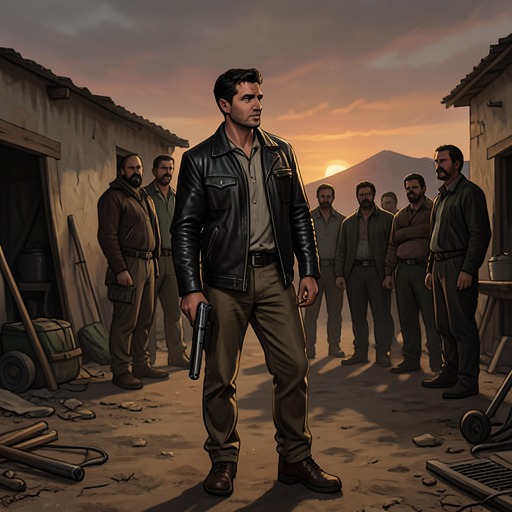
Landon tries to run, but Del calls him back. Landon turns and fires first; Del’s return shots bring him down in the street, ending the threat to Kate and the town’s subjection to his private rule.
Moments after Landon falls
The Kid’s Death
Del turns to find [The Kid](entity:character-recall-character-the-kid-4a3570659ab1) wounded and dying, having killed [Hawk Sloan](entity:character-recall-character-hawk-sloan-9556daac0dd4) but taken a fatal shot in the exchange. The Kid faces death without regret, tells Del and [John Smith](entity:character-recall-character-john-smith-c7be07591715) that he did what he meant to do, and dies before the town’s doctor can help.
After the gunfight
Roily Finds Its Courage
[Charles Nathrop](entity:character-recall-character-charles-nathrop-acf2baf41c84) explains that Del’s resistance has done the town a service, and the townspeople gather around the bodies and the survivors. Kate and Del embrace openly, while [John Smith](entity:character-recall-character-john-smith-c7be07591715) grieves for [The Kid](entity:character-recall-character-the-kid-4a3570659ab1) and recognizes how much he has learned from Kate’s courage.
Near the ending
A New Life at the Diamond M
[John Smith](entity:character-recall-character-john-smith-c7be07591715) decides to return home and face the murder charge rather than keep running. Kate plans to take over the ranch and appoint Del as foreman, while Del and Kate agree to marry soon, accepting a shared future at the [Diamond M](entity:organization-recall-organization-diamond-m-7181d62b51ee).